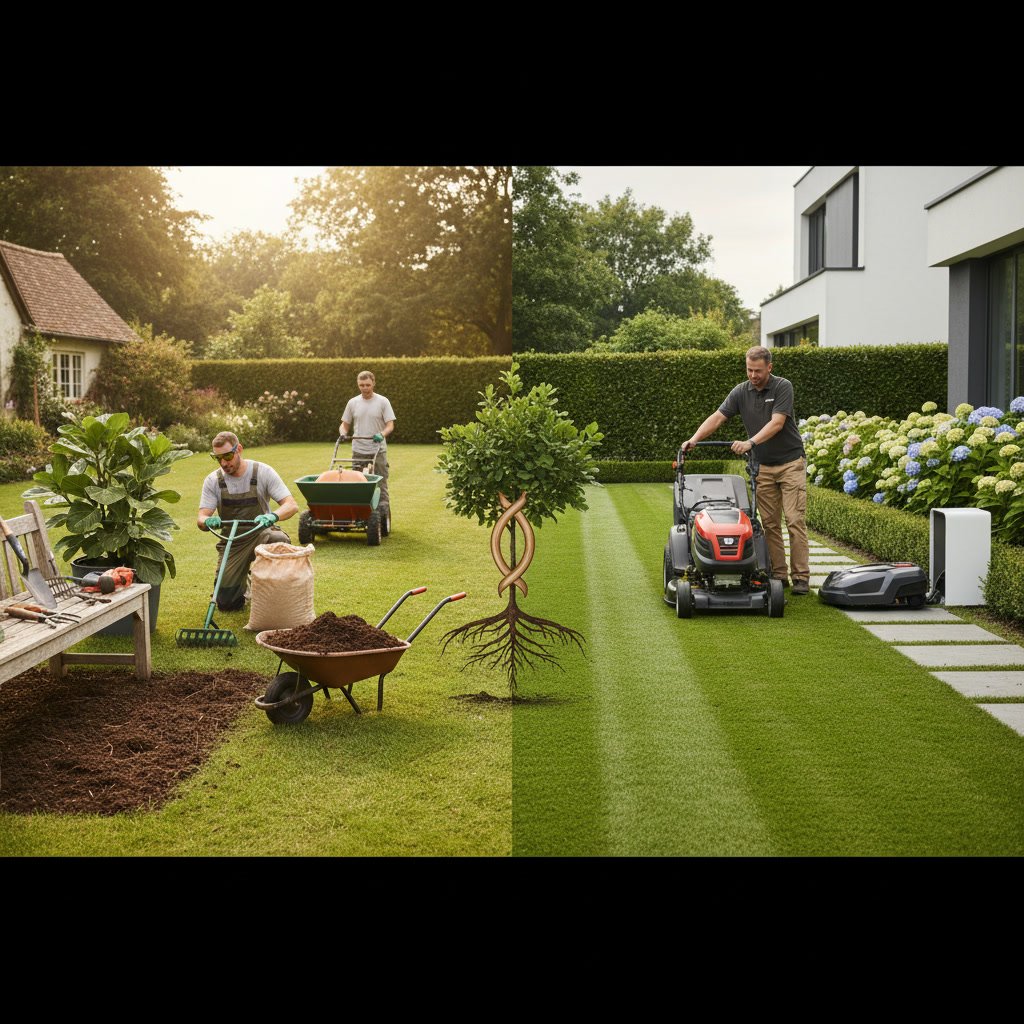
The distinction between lawn care vs lawn maintenance matters because each addresses different property needs with specific techniques and schedules. Lawn care focuses on the health and growth of grass through biological treatments like fertilization, weed control, and aeration. Lawn maintenance handles the physical upkeep of your property through mowing, trimming, edging, and debris removal. Most properties benefit from both services working together rather than choosing one over the other.
Why Homeowners Confuse These Two Services
The confusion stems from how companies market their services and package their offerings. Many businesses use these terms interchangeably in advertisements, which blurs the line between what each service actually delivers. The overlap happens because both services work on the same canvas, your lawn, but they approach it from completely different angles.
Another factor is that quality results require both services. You can mow a lawn weekly and keep it neat, but without proper fertilization and weed control, the grass will thin out and weaken over time. Similarly, you can apply the best treatments available, but if nobody cuts the grass or removes debris, the property still looks neglected.
What Lawn Care Actually Includes
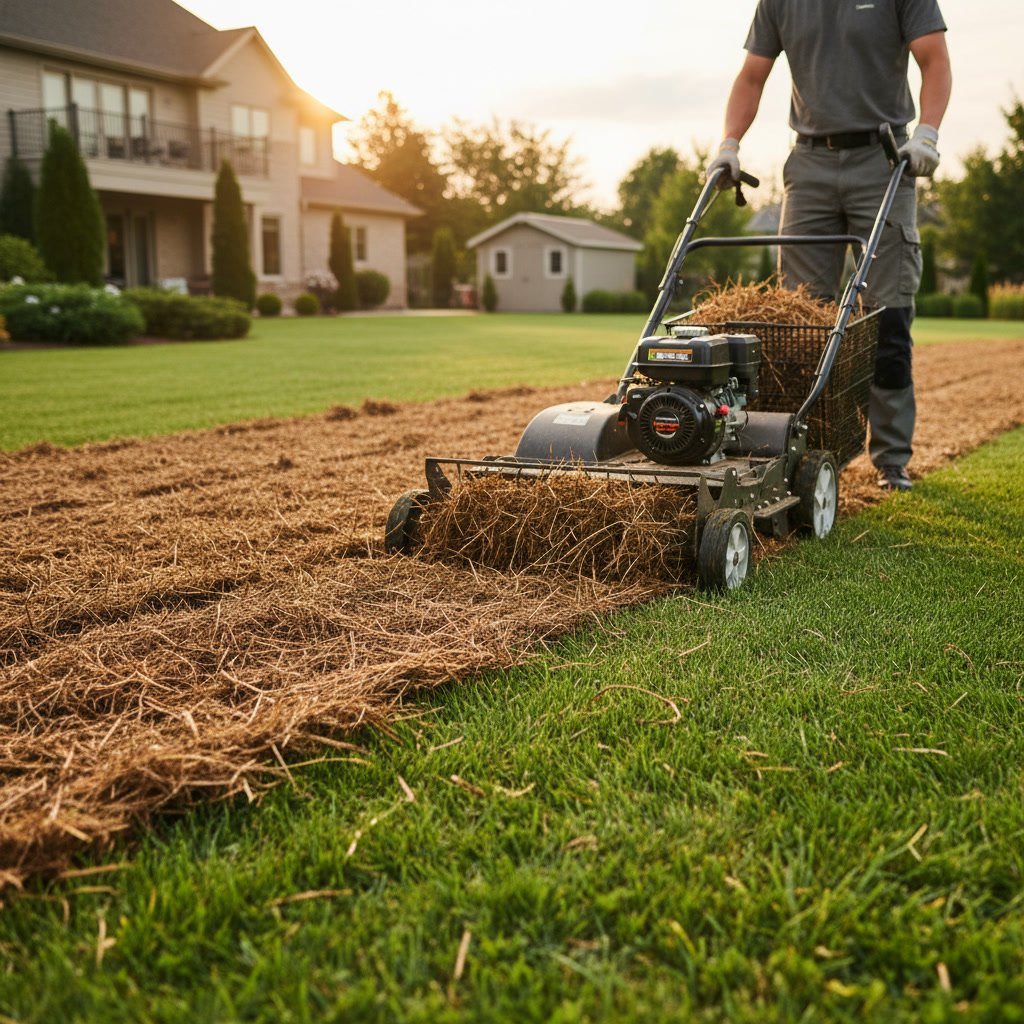
Lawn care treats your grass as a living plant system that needs nutrients, disease prevention, and environmental adjustments to thrive. The primary components include fertilization programs timed to grass growth cycles, pre-emergent and post-emergent weed control applications, soil pH testing and amendments, insect and disease management, and core aeration to improve root development.
These services follow a calendar based on grass type, climate zones, and seasonal conditions rather than a fixed weekly schedule. A typical lawn care program in the Kansas City area runs five to seven applications per year, targeting specific growth phases and preventing problems before they damage the turf.
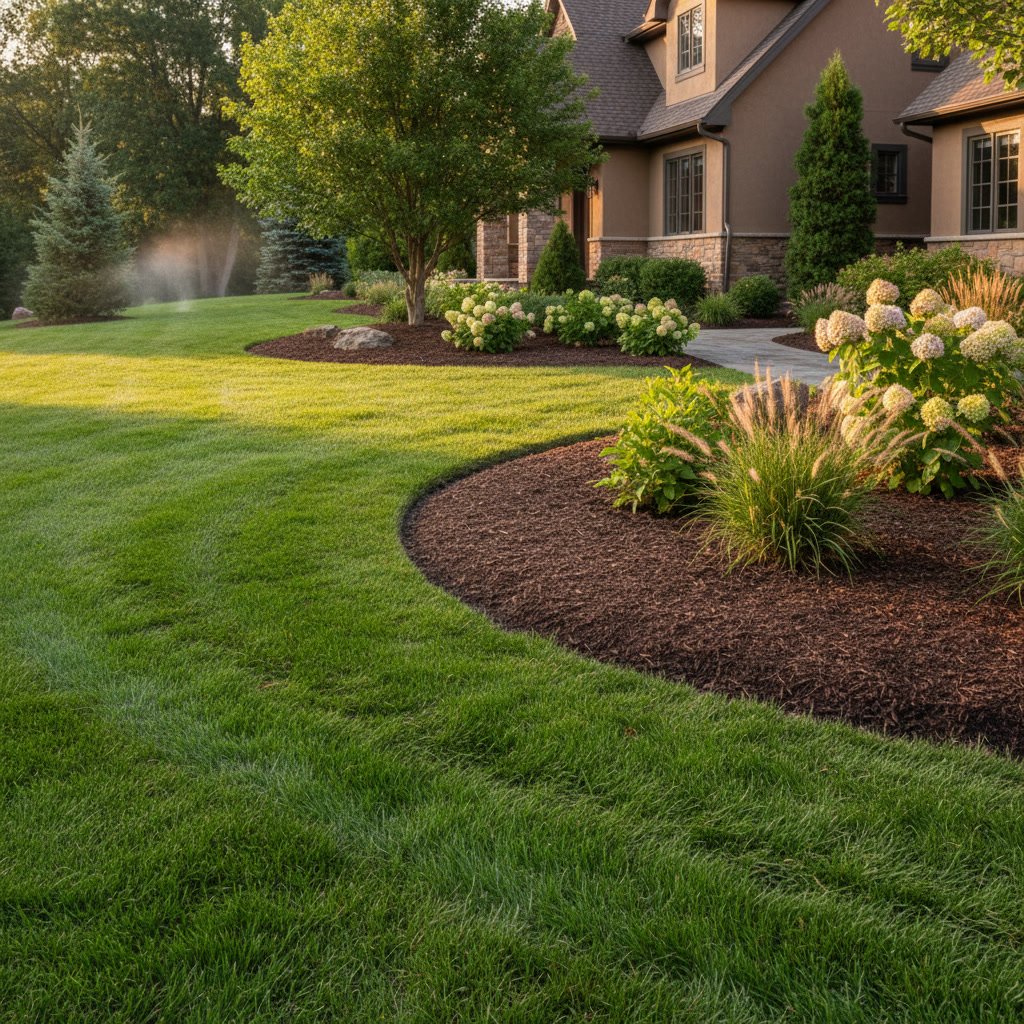
The goal is always to create dense, healthy grass that naturally resists weeds, disease, and drought stress. Strong turf crowds out unwanted plants and requires fewer chemical interventions over time as the root system develops and the soil biology improves.
What Lawn Maintenance Covers
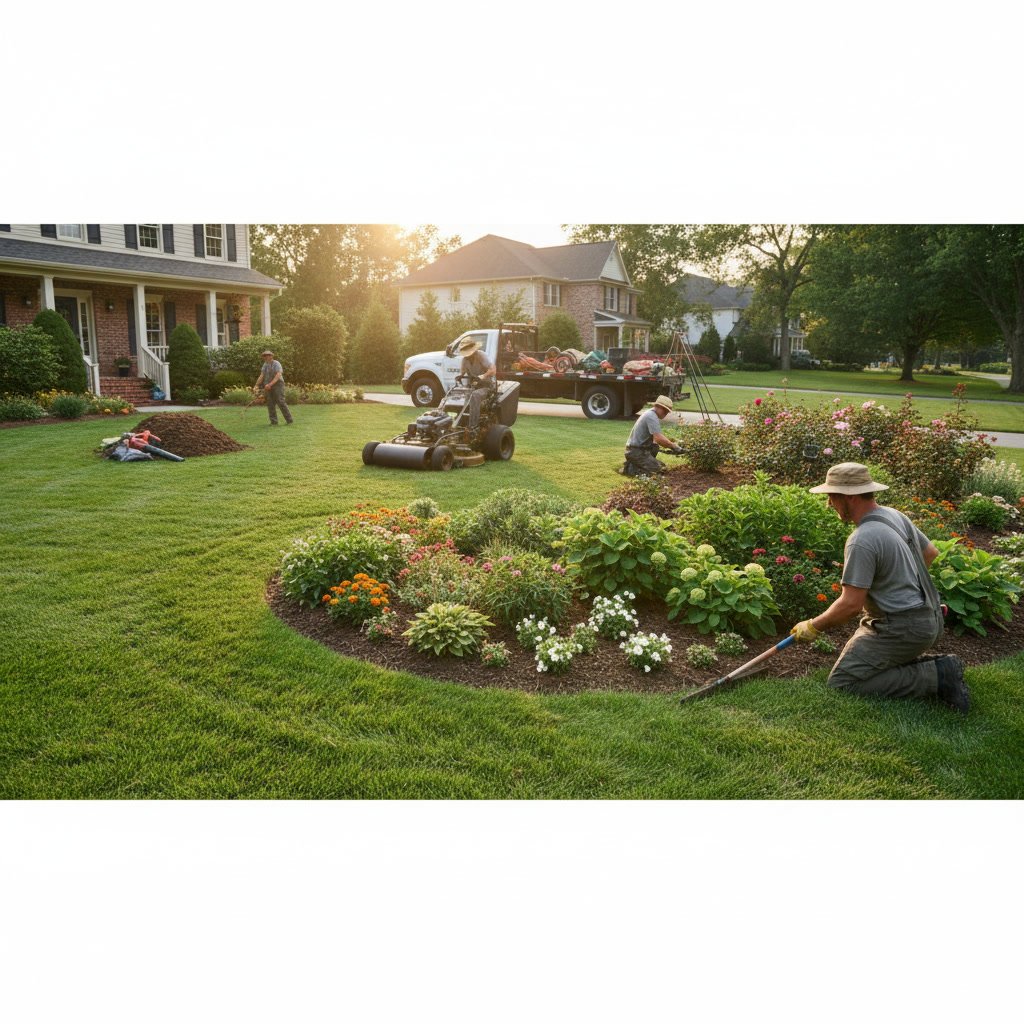
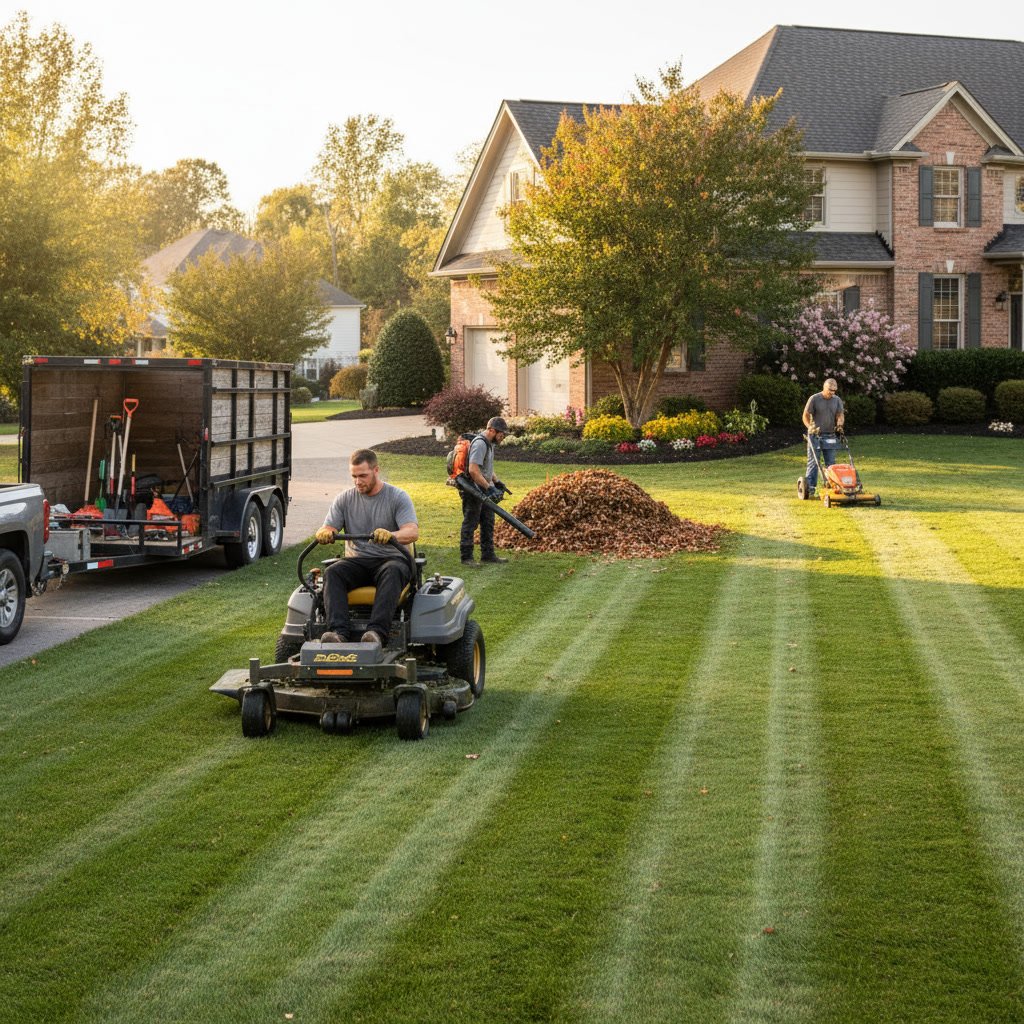
Lawn maintenance handles the regular physical tasks that keep your property looking clean and well-kept between lawn care treatments. The core services include mowing at the correct height for your grass type, string trimming around obstacles and edges, blowing debris off hardscapes, and edging along sidewalks and driveways.
Most residential properties need lawn maintenance weekly during the growing season, which runs from April through October in Missouri. The frequency may adjust to every 10 to 14 days during drought periods or extreme heat when grass growth slows significantly.
Maintenance also extends to seasonal tasks beyond the basic mowing cycle. Spring and fall cleanup, leaf removal, mulch bed refreshing, and trimming back perennials all fall under maintenance rather than care because they address appearance and physical condition rather than plant health.
How to Identify What Your Property Needs in Parkville
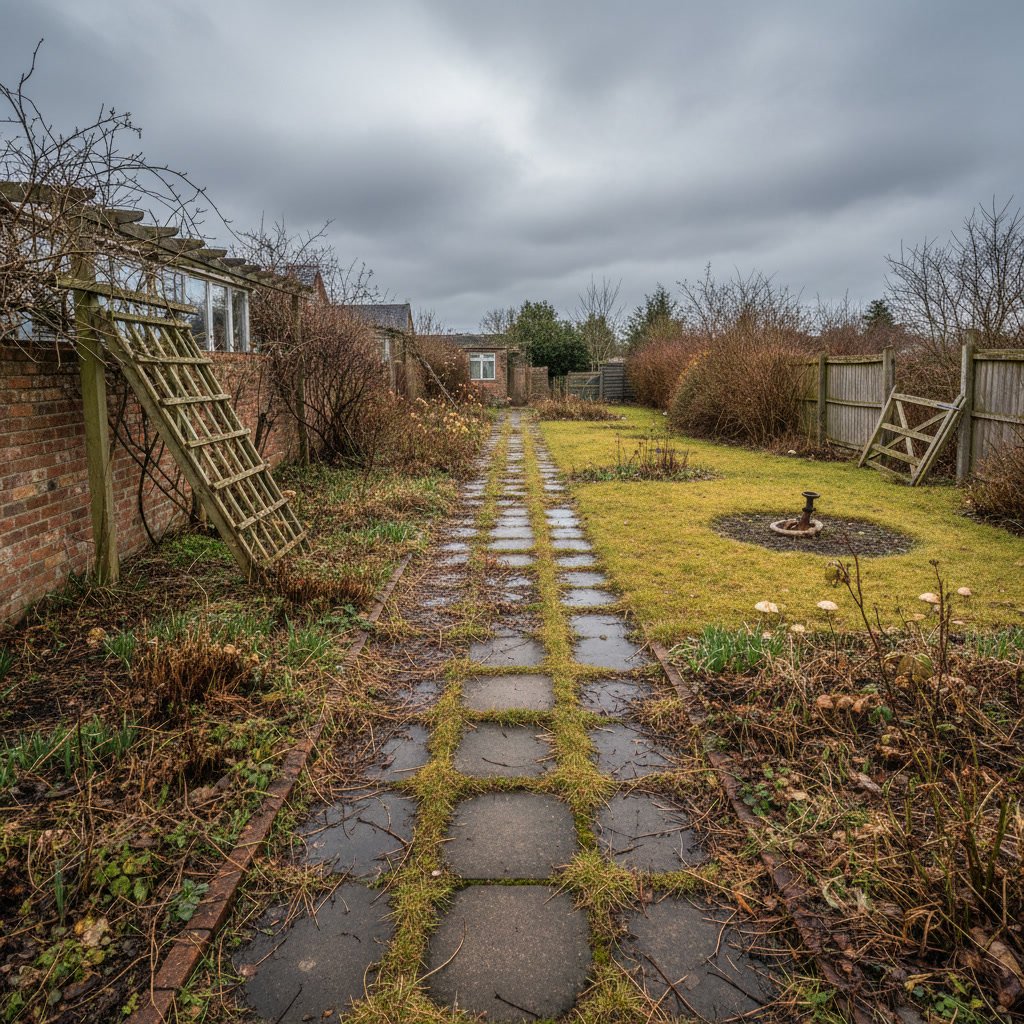
Walk your property and look at the grass itself, not just the overall appearance. If you see thin patches, widespread weeds, discoloration that isn’t drought-related, or moss growth, your lawn needs care services to address underlying health problems. These issues don’t resolve with more frequent mowing.
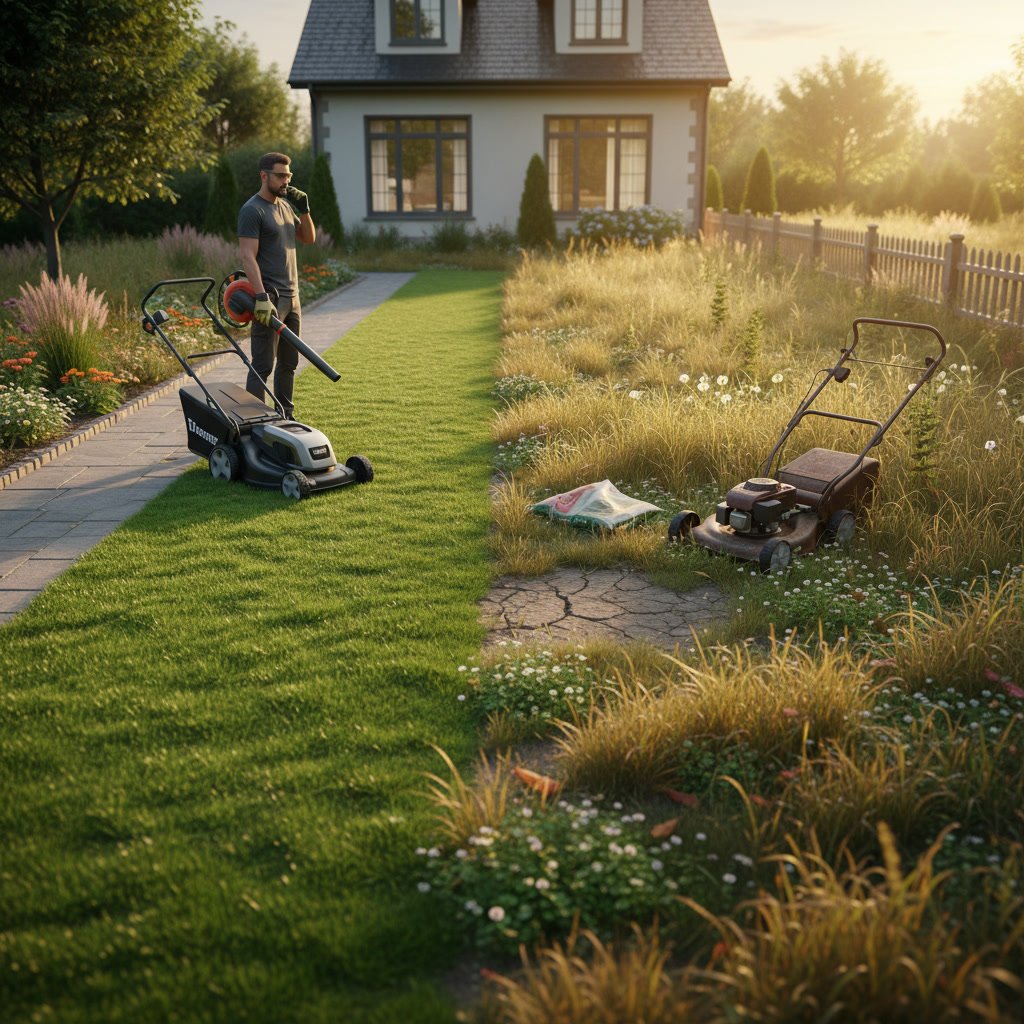
If your grass is thick and green but the property looks messy with overgrown edges, uneven grass height, or debris scattered across beds and hardscapes, you need maintenance services. The health is there, but the presentation suffers from lack of regular attention.
Many Parkville properties need both services but at different intensities depending on the property’s condition and the owner’s priorities. A newly sodded lawn requires intensive care for the first year but minimal maintenance until the grass establishes. A mature landscape with healthy turf may need only basic care but weekly maintenance to handle rapid spring growth.
The Cost Structure Difference Between Services
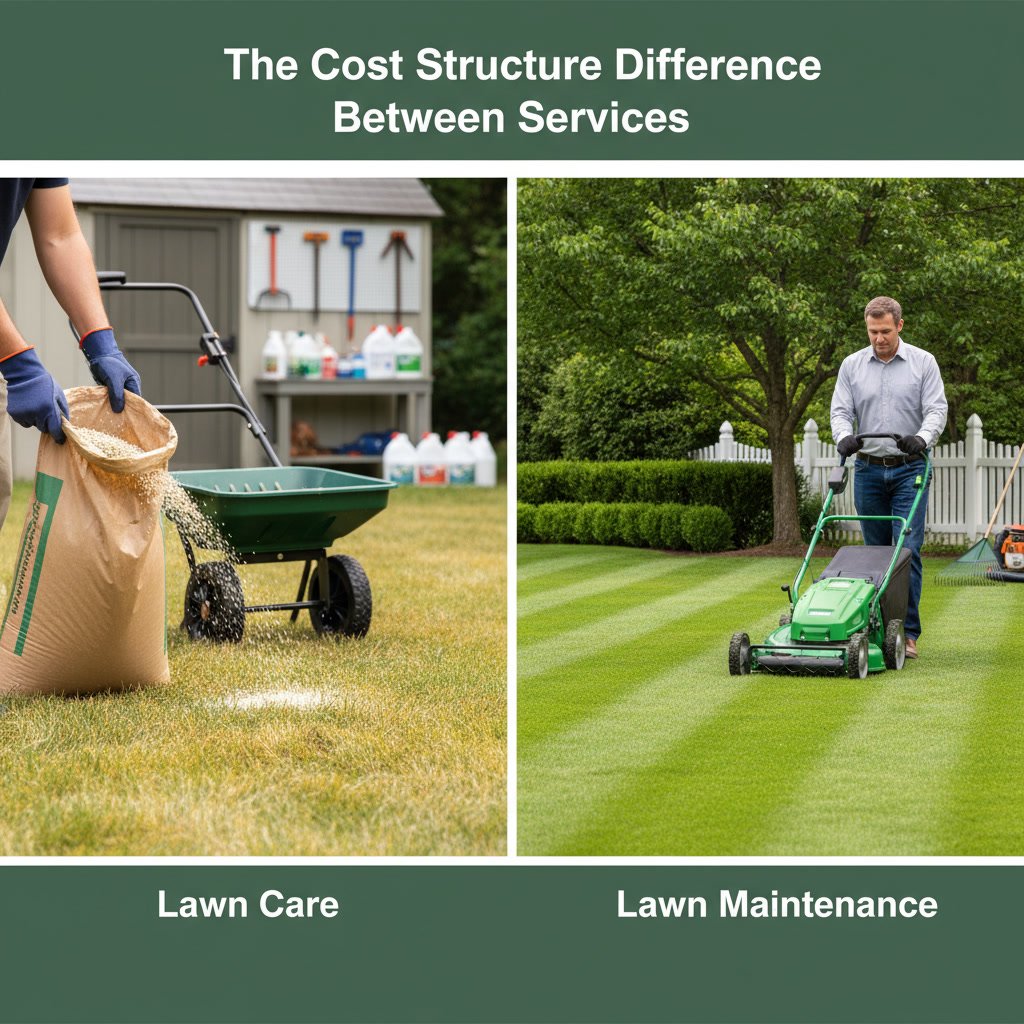
Lawn care typically bills per application or as an annual program with payments spread across the treatment season. Pricing depends on property size measured in square footage, the number of applications included, and any specialty treatments like grub control or fungicide. Most programs range from five to eight treatments annually.
Maintenance services usually bill per visit or monthly during the active season. The cost factors include property size, complexity of the landscape, time required per visit, and frequency of service. Weekly maintenance throughout the growing season adds up to roughly 26 to 28 visits per year.
Understanding this difference helps with budgeting because care costs concentrate in spring and fall when treatments occur most frequently, while maintenance costs peak during summer when grass grows fastest and requires the most attention.
When Properties Need Only One Service
Some situations genuinely require just one service rather than both. Properties with minimal landscaping, drought-tolerant native grasses, or owners who enjoy mowing as a hobby may only need professional care services while handling their own maintenance tasks.
Conversely, properties with established, healthy turf that has received proper care for years may only need maintenance to keep the appearance sharp. If soil tests show balanced pH, organic matter sits at healthy levels, and weed pressure remains minimal, you can potentially skip regular care treatments and focus budget on maintenance.
Rental properties and commercial sites with basic landscape standards often choose maintenance-only services because the priority is keeping the property presentable rather than achieving premium turf quality. The calculation shifts to appearance per dollar rather than long-term turf health.
How Both Services Work Together
The relationship between care and maintenance creates a multiplying effect rather than just an additive one. Proper fertilization makes grass grow denser and more upright, which makes mowing more efficient and produces better visual results. Regular mowing at the correct height reduces stress on treated grass and helps applications penetrate to the soil more effectively.
Maintenance crews also serve as early warning systems for care needs. Technicians who visit weekly notice disease outbreaks, insect damage, or irrigation problems days or weeks before they become visible to property owners. This allows care specialists to intervene early when treatments work best and cost less.
The inverse matters too. Care programs that include weed control reduce the time maintenance crews spend trimming around obstacles because fewer weeds grow in beds and along fences. Healthier, denser grass requires less frequent mowing during stress periods, reducing visits and costs during peak summer heat.
Red Flags That Indicate You Need Professional Help
Certain warning signs indicate that DIY efforts aren’t meeting your property’s needs and professional intervention will save time and money in the long run. Grass that stays thin despite regular watering and mowing signals nutrient deficiency or soil compaction that requires professional diagnosis and treatment.
Weed populations that return within weeks of application mean either the wrong product, wrong timing, or underlying soil conditions that favor weed growth over grass. Professional care programs sequence treatments to break weed life cycles rather than just burning back visible growth.
If you find yourself spending more than three hours per week on lawn tasks during peak season, the time cost likely exceeds the financial cost of outdoor landscape maintenance services. Equipment costs, product purchases, and the value of your time add up quickly when you calculate the true expense of DIY.
Seasonal Variations in Service Needs
Spring demands the highest intensity of both services as grass emerges from dormancy and grows rapidly. Care programs apply pre-emergent herbicides, starter fertilizers, and lime if needed. Maintenance shifts to weekly visits as temperatures rise and rainfall fuels growth.
Summer maintenance continues weekly but care applications space out to every six to eight weeks, focusing on sustained feeding and spot weed control. Heat stress makes this the period when irrigation management becomes the critical care factor that separates thriving lawns from declining ones.
Fall represents the second peak for care services with aeration, overseeding, and winterizer fertilizer applications that set up the lawn for next year’s performance. Maintenance frequency decreases as growth slows but remains important through October. Understanding these patterns helps you make informed decisions about what professional services include during each season.
Making the Right Choice for Your Property
Start by honestly assessing your property goals and available time. If you want a lawn that impresses neighbors and adds property value, both services working in coordination deliver the best return on investment. If you simply need the property to look neat and avoid code violations, maintenance alone may suffice.
Consider your lawn’s current condition as the starting point. Properties with significant problems, bare patches, or heavy weed infestations need care services first to establish a healthy foundation before maintenance delivers visible improvements. Starting with maintenance on an unhealthy lawn wastes money because you’re grooming grass that continues to decline.
Budget constraints are legitimate factors in the decision. If you must choose one service, care provides more lasting value because it improves the actual plant health rather than just managing appearance. A healthy lawn tolerates occasional missed mowing better than a regularly mowed lawn tolerates nutrient deficiency and weed competition.
Factor in whether you need specialized services beyond basic care and maintenance. Properties requiring yard cleanup after storms, seasonal plantings, or ongoing landscaping services benefit most from providers who offer complete packages rather than piecing together multiple vendors.
Getting Your Property on the Right Track
The clearest path forward combines both services in a coordinated program that addresses your property’s specific conditions and your goals for appearance and health. All Season Lawn and Landscaping LLC has built its reputation since 2008 on understanding exactly how these services complement each other and delivering both with consistent quality.
Most properties achieve their best results within one full growing season when both care and maintenance programs work together from the start. The grass responds to proper nutrients and treatment while regular maintenance keeps the property looking sharp throughout the improvement process.
Your property deserves services that match its actual needs rather than a one-size-fits-all approach that may overlook critical care or waste money on unnecessary maintenance. All Season Lawn and Landscaping LLC evaluates properties individually and recommends the right combination of services based on current conditions, grass type, soil quality, and your specific goals. Call +18163633203 to schedule an evaluation and get your property on a program that delivers real results.