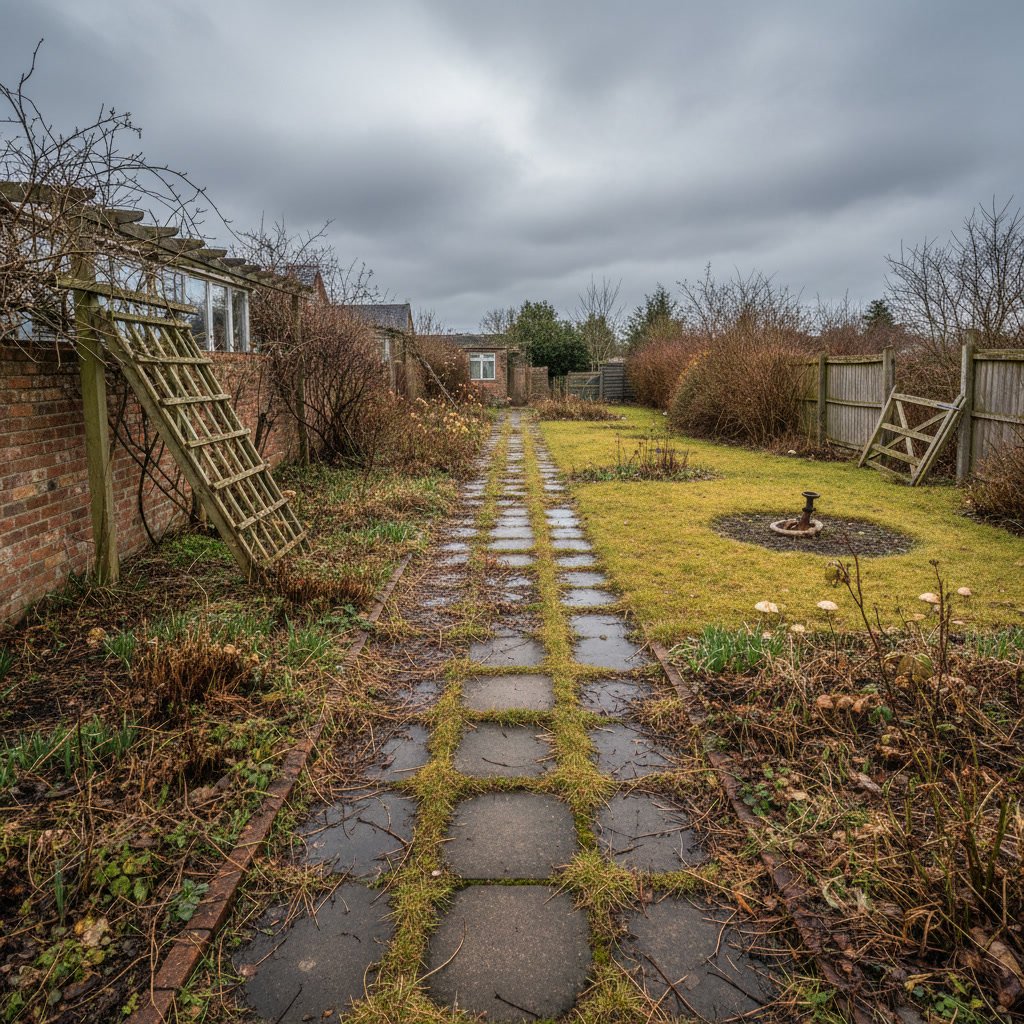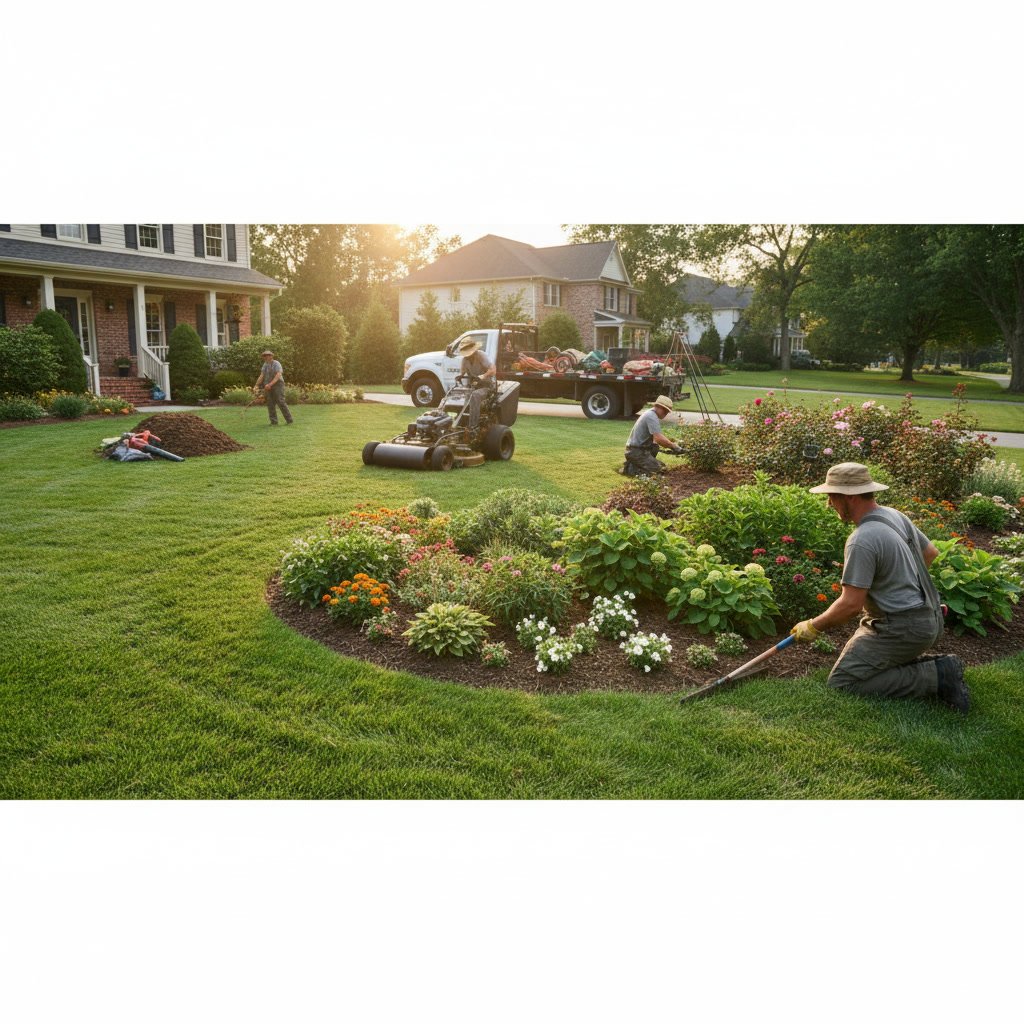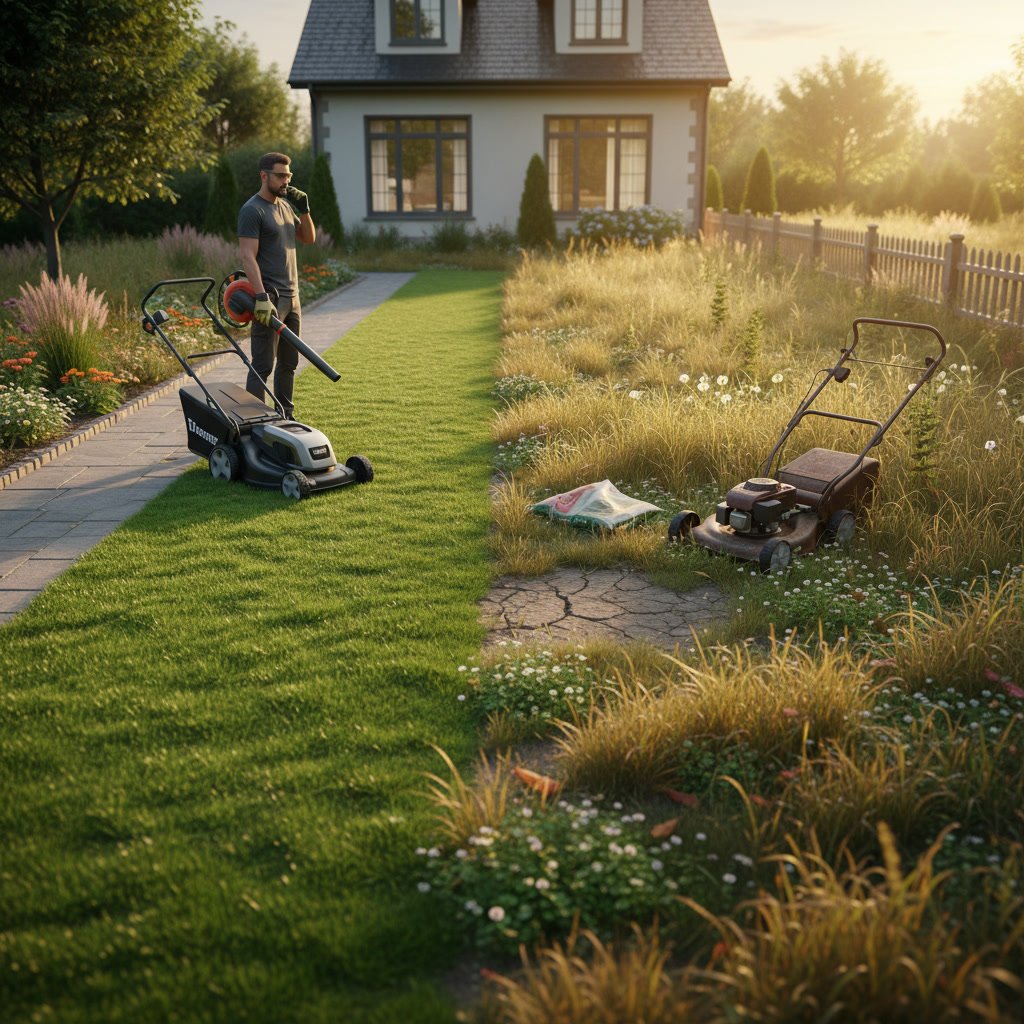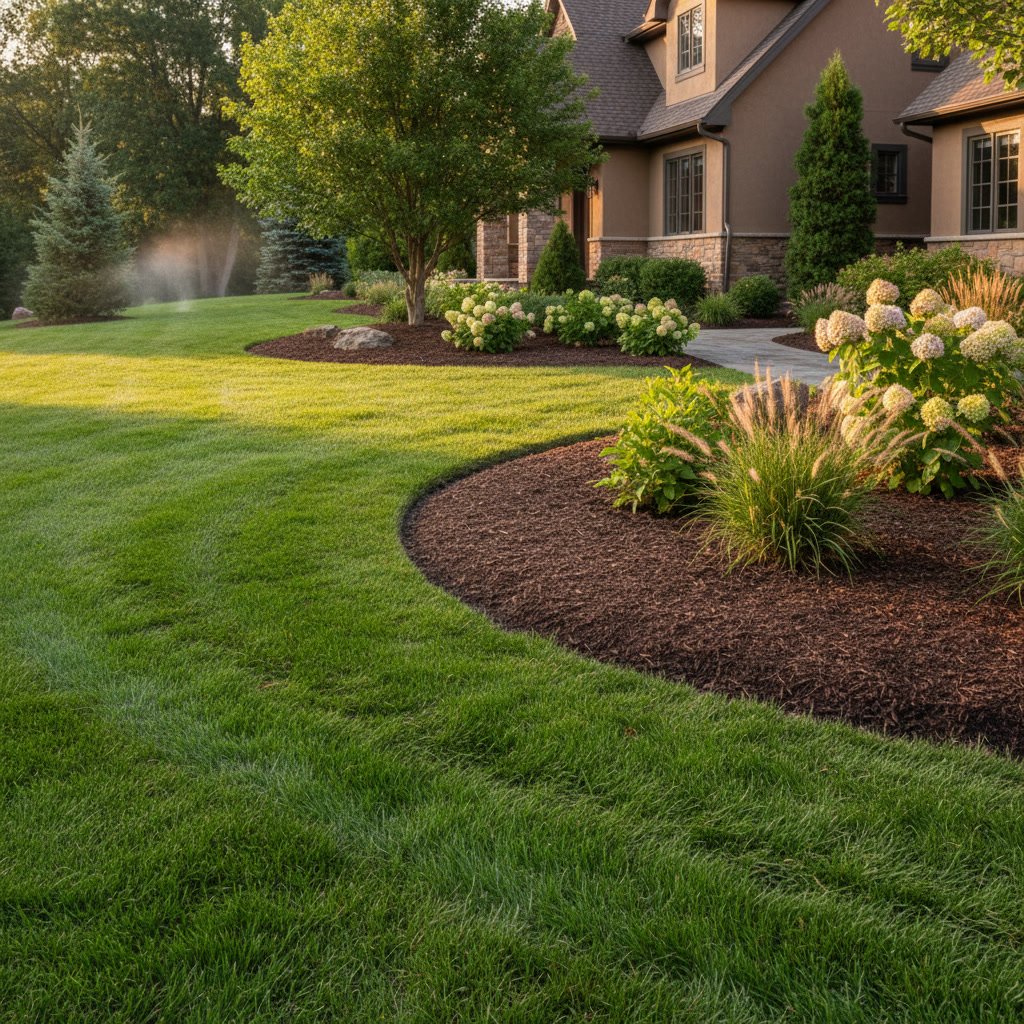
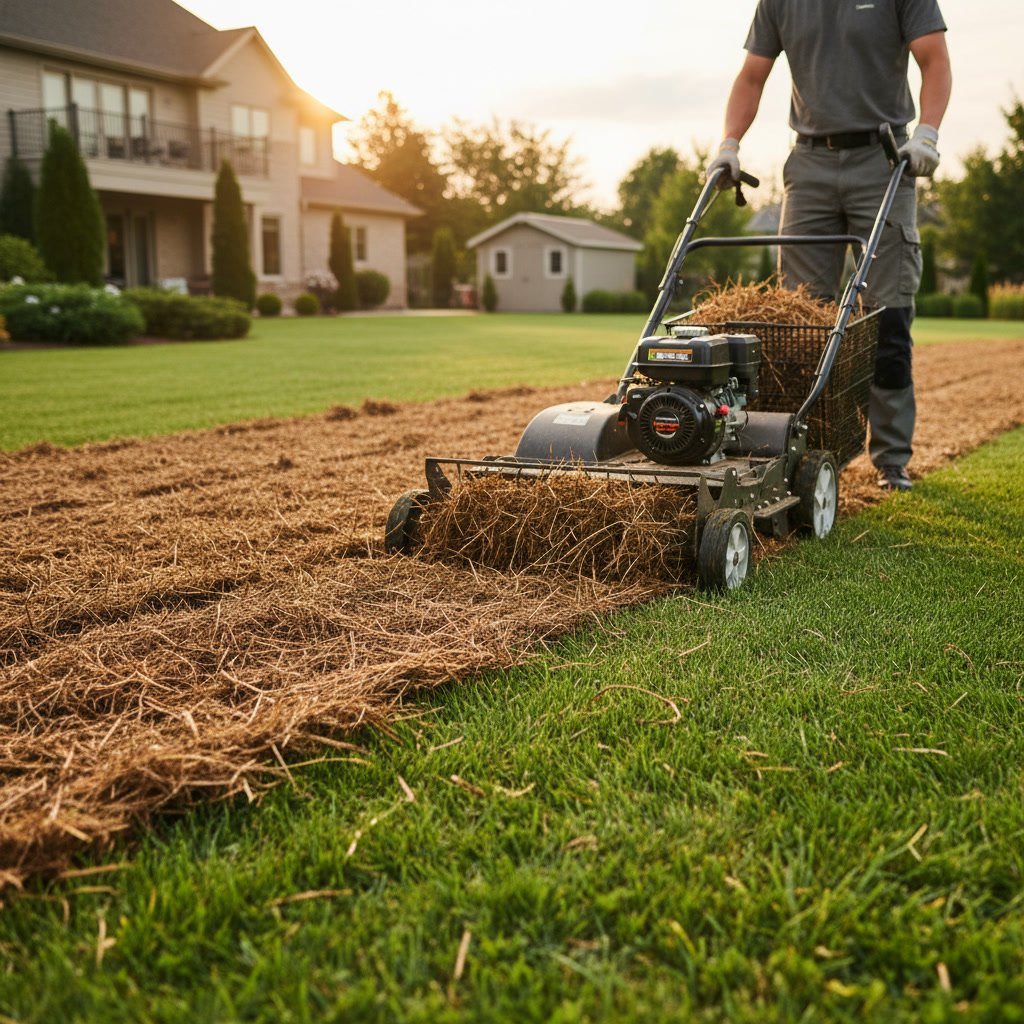
Lawn dethatching removes the thick layer of dead grass and organic debris that blocks water, nutrients, and oxygen from reaching your soil. When thatch exceeds half an inch, your turf struggles to thrive no matter how much you water or fertilize. Professional dethatching restores soil contact, improves root development, and creates the foundation for a dense, resilient lawn that resists disease and drought.
Many homeowners invest in regular mowing, watering, and fertilization yet still see patchy, thinning grass. The hidden culprit is often a thick thatch layer that prevents even the best care from reaching the root zone. Understanding when and how to address this problem transforms struggling turf into a healthy, vibrant landscape.
What Thatch Is and Why It Accumulates
Thatch consists of dead grass stems, roots, clippings, and other organic matter that builds up between the green blades and the soil surface. A thin layer of about a quarter inch is normal and even beneficial, providing insulation and cushioning. Problems begin when the accumulation rate exceeds the decomposition rate.
Several factors accelerate thatch buildup. Overwatering and heavy fertilization promote rapid grass growth but slow microbial breakdown. Certain grass types, particularly Kentucky bluegrass and fine fescue, naturally produce more stem material. Compacted soil with poor drainage reduces the earthworm and microbe populations that normally decompose organic matter. Infrequent mowing that removes too much blade length at once also contributes excess material.
You can check your thatch depth by cutting a small wedge from your lawn with a spade. Remove a triangular section about three inches deep and measure the brown, spongy layer between the grass blades and the soil. If it measures more than half an inch, your lawn needs intervention.
How Excess Thatch Damages Your Lawn
A thick thatch layer acts like a waterproof barrier. When you water or rain falls, moisture sits on top of the thatch instead of penetrating to the root zone. Grass roots grow into the thatch layer rather than anchoring deeply in soil, making plants vulnerable to heat stress and drought.
Nutrients applied through fertilization never reach the soil. They bind to the thatch or wash away, wasting your investment and creating environmental runoff. The spongy, moist thatch environment becomes a breeding ground for fungal diseases like brown patch and snow mold. Insects including chinch bugs and sod webworms thrive in the protected layer.
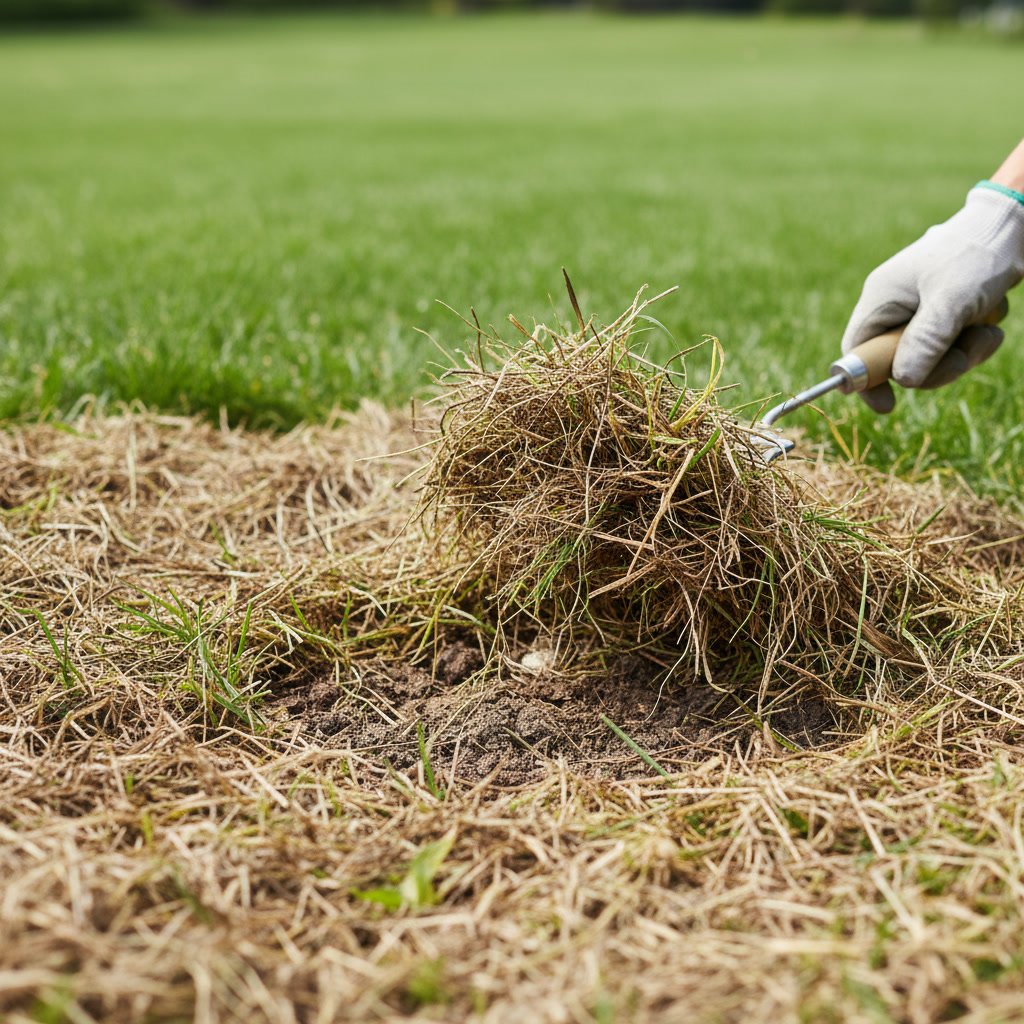
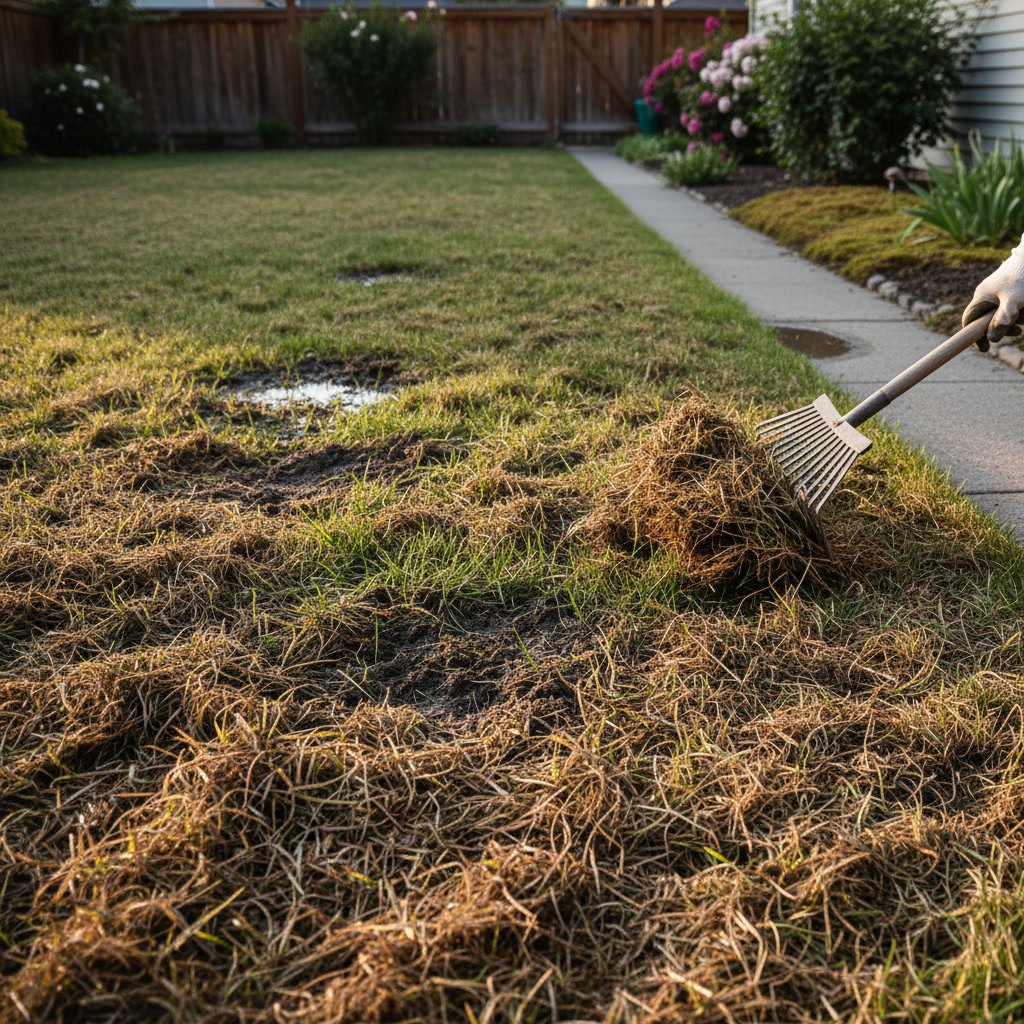
Thatch also creates an uneven, spongy surface that makes mowing difficult and scalping more likely. Low spots collect water while high spots dry out quickly. Over time, the lawn develops dead patches, increased weed pressure, and an overall decline in density and color that no amount of surface treatments can fix.
The Process and Timing for Dethatching in Parkville
Professional dethatching uses specialized equipment with vertical blades or spring tines that slice through the thatch layer and pull debris to the surface. The process is aggressive and temporarily stresses the grass, so timing matters significantly.
For cool-season grasses common in the Parkville area, early fall is the ideal window. September provides warm soil temperatures that promote rapid recovery while giving grass several weeks of growth before winter dormancy. The second-best window is mid-spring after the lawn greens up but before summer heat arrives.
Never dethatch during periods of heat stress, drought, or when grass is already struggling. The mechanical action removes some healthy grass along with thatch, and the lawn needs optimal growing conditions to fill in quickly. Professional lawn care providers assess your grass type, current health, and weather patterns to select the right timing.
What to Expect During and After the Service
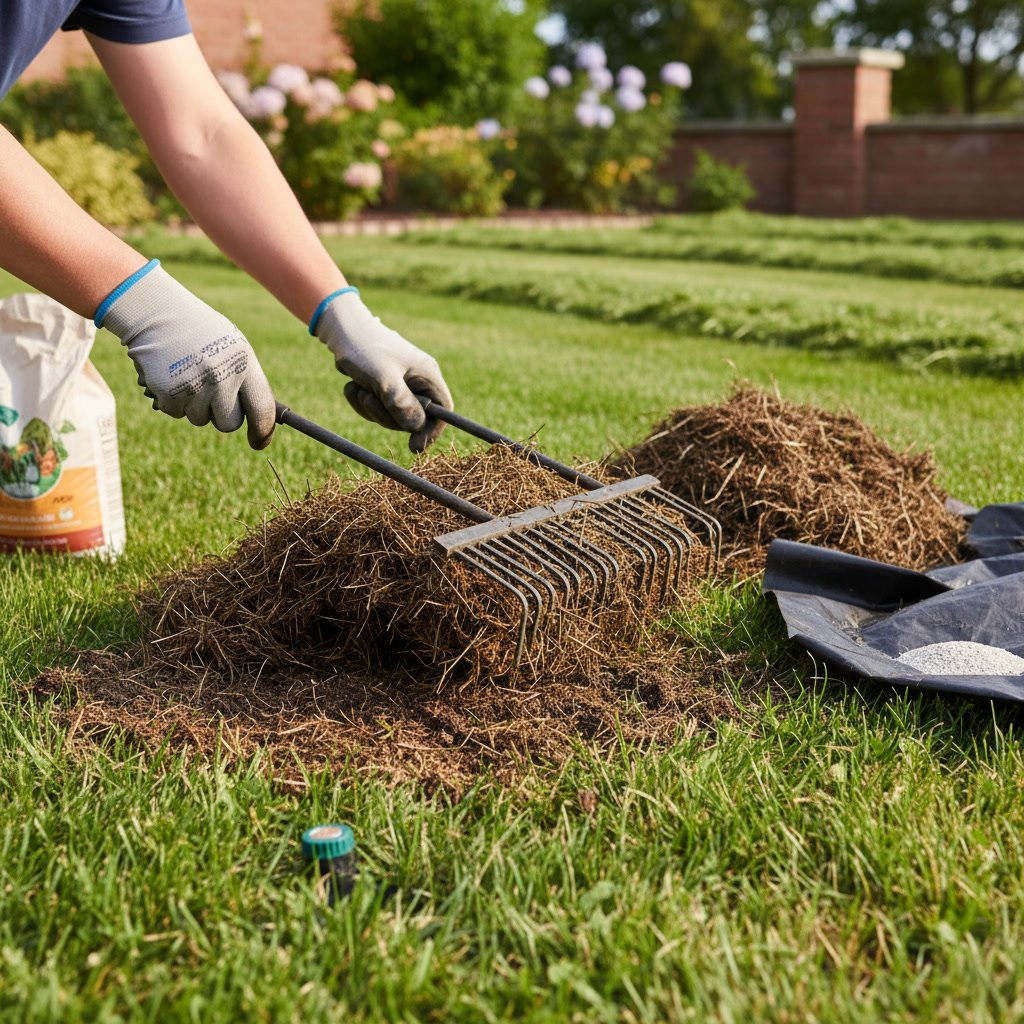
Before dethatching begins, mow your lawn slightly shorter than normal to allow the machine blades better access to the thatch layer. The equipment makes multiple passes in different directions, creating a checkerboard pattern of cuts. The process produces large volumes of brown, stringy debris that must be raked and removed.
Immediately after dethatching, your lawn will look worse than before. Exposed soil, visible blade cuts, and sparse grass are normal and temporary. This is the perfect opportunity to overseed, as the dethatching process creates ideal seed-to-soil contact. Applying a starter fertilizer and maintaining consistent moisture accelerates recovery.
Within two to three weeks under proper conditions, new growth fills in the disturbed areas. The grass develops deeper, stronger roots in the newly accessible soil. You’ll notice improved water penetration, better fertilizer response, and a thicker turf that crowds out weeds naturally.
Five Clear Signs Your Lawn Needs Dethatching
Physical inspection reveals the first sign: a thatch layer measuring more than half an inch thick. Beyond direct measurement, several visible symptoms indicate excessive accumulation.
Your lawn feels spongy or bouncy when you walk on it rather than firm. Water pools on the surface after irrigation or rain instead of soaking in quickly. The grass shows drought stress even with regular watering, wilting or browning during moderate heat. Fertilizer applications produce little visible improvement in color or growth.
Increased disease pressure appears as circular brown patches, powdery coatings, or irregular dead spots that spread despite fungicide treatments. These five indicators together suggest that thatch has reached problem levels requiring professional attention.
Dethatching Versus Core Aeration
Many homeowners confuse dethatching with core aeration, but these services address different problems. Dethatching removes the organic layer above the soil surface. Aeration pulls small plugs of soil from the ground to relieve compaction and improve air exchange in the root zone.
Compacted soil benefits from aeration, which creates channels for water, nutrients, and oxygen without removing thatch. Thick thatch requires dethatching, which doesn’t address soil density. Many lawns benefit from both services performed in sequence during the same season. Professional lawn maintenance programs often combine these treatments for optimal results.
The equipment also differs significantly. Dethatchers use vertical blades or spring tines that rake through the grass. Aerators use hollow tines that pull cylindrical plugs or solid spoons that create holes. Understanding which service your lawn needs prevents wasted effort and expense on the wrong treatment.
Post-Dethatching Care for Best Results
The recovery period after dethatching determines long-term success. Water lightly and frequently for the first week to keep the soil surface moist but not saturated. This encourages rapid healing of damaged grass crowns and promotes new root development into the exposed soil.
Overseeding immediately after dethatching takes advantage of the excellent seed contact created by the process. Choose a seed variety matched to your existing grass type and local climate. Apply a starter fertilizer with higher phosphorus content to support root establishment rather than top growth.
Avoid heavy foot traffic for at least two weeks after service. The combination of mechanical stress and new seed germination makes the lawn vulnerable to damage. Delay herbicide applications for four to six weeks, as both pre-emergent and post-emergent products can harm newly germinated grass. Professional outdoor landscape maintenance services coordinate these treatments with appropriate spacing.
Preventing Future Thatch Buildup
Once you’ve invested in dethatching, proper ongoing care prevents rapid reaccumulation. Adjust your watering schedule to deep, infrequent sessions rather than shallow daily watering. This encourages deep root growth in soil rather than shallow roots in thatch.
Moderate your fertilization program. Excessive nitrogen promotes rapid top growth that produces more stem material than soil microbes can decompose. Follow soil test recommendations rather than calendar-based feeding schedules. Many homeowners apply twice the nitrogen their lawn actually needs.
Mow frequently enough that you remove no more than one-third of the blade height at each cutting. Removing excessive length at once dumps more material onto the soil than microbes can process. Leave clippings on the lawn during normal mowing, as these thin leaf blades decompose quickly and return nitrogen to the soil without contributing to thatch.
Core aeration every one to two years improves soil biology and decomposition rates. The increased earthworm activity and microbial populations process organic matter more efficiently. This preventive approach maintains healthy thatch levels without repeated mechanical removal.
When Professional Service Makes Sense
Rental dethatching equipment is available at many hardware stores, but several factors favor professional service. Consumer-grade machines lack the weight and power to effectively remove thick thatch in one pass, often requiring multiple rentals. The equipment is heavy, difficult to transport, and requires specific handling to avoid scalping or damaging the lawn.
Professionals assess your specific grass type, thatch depth, and soil conditions to select appropriate blade settings and number of passes. They coordinate dethatching with overseeding, fertilization, and other treatments for comprehensive results. The debris removal alone can fill multiple lawn bags, creating a disposal challenge for individual homeowners.
Most importantly, experienced providers recognize when dethatching is the wrong solution. Some lawn problems that appear to be thatch-related actually stem from soil compaction, disease, or improper watering. Unnecessary dethatching damages healthy lawns and wastes resources. As discussed in professional lawn maintenance services, comprehensive care addresses all factors affecting lawn health.
Cost Factors and Service Expectations
Dethatching costs vary based on lawn size, thatch severity, and regional labor rates. Most providers charge by the square foot or offer tiered pricing for common lot sizes. Typical residential lawns between 5,000 and 10,000 square feet represent the majority of service calls.
Additional costs often include debris removal, overseeding, and starter fertilizer application. Some companies bundle these services into packages that provide better value than individual treatments. Request detailed estimates that specify included services, expected timeline, and post-treatment care recommendations.
Quality providers inspect your lawn before quoting, measuring thatch depth and assessing grass health. They explain why dethatching is recommended or suggest alternative treatments if appropriate. Avoid services that quote without inspection or push dethatching on thin lawns that don’t need it. Considering yard cleanup services alongside dethatching can address multiple seasonal needs efficiently.
Building a Healthier Lawn Through Proper Thatch Management
Managing thatch effectively transforms lawn care from a cycle of frustration into predictable, sustainable results. A lawn with appropriate thatch levels responds dramatically to water, fertilizer, and routine maintenance. Dense, deep-rooted grass resists weeds, recovers quickly from stress, and maintains color through summer heat.
The investment in professional dethatching pays dividends for multiple seasons when combined with proper follow-up care. All Season Lawn and Landscaping LLC has served homeowners throughout the Kansas City area since 2008, developing comprehensive programs that address both immediate problems and long-term lawn health. Regular monitoring prevents thatch from reaching problem levels again, eliminating the need for repeated aggressive treatment.
Understanding your lawn’s specific needs based on grass type, soil conditions, and usage patterns allows you to make informed decisions about dethatching timing and frequency. Most healthy lawns require the service every three to five years, while others with rapid growth or poor soil biology may need more frequent attention.
If your lawn shows signs of excessive thatch or hasn’t responded to regular care, professional assessment identifies the underlying cause and creates a targeted treatment plan. All Season Lawn and Landscaping LLC provides comprehensive evaluations and expert service throughout Parkville, Weatherby Lake, Gladstone, and Liberty. Contact us at +18163633203 to schedule an inspection and restore your lawn’s health from the ground up.